The global race for artificial intelligence is no longer just about building better models or developing faster computers. It is increasingly about who controls the advanced chips that make modern AI possible.
A growing debate inside the US government is bringing that question into focus. Commerce Secretary Howard Lutnick is facing scrutiny over his approach to proposed restrictions on advanced AI chip access for overseas data centers serving Chinese companies. The controversy also involves reported business connections between his former firm, Cantor Fitzgerald, and companies operating in Southeast Asia's expanding data center industry.
The issue has drawn attention because the decisions being considered could influence the future of America's technology relationship with China and the global semiconductor market.
Why NVIDIA Chips Are at the Center of the Debate
NVIDIA has become one of the most important companies in the artificial intelligence industry. Its advanced processors power large AI models, cloud computing platforms and the data centers supporting the next generation of digital services.

These chips are also strategically important. Advanced computing technology has applications beyond commercial AI, including areas relevant to national security and military development.
The US government has therefore introduced restrictions designed to limit China's direct access to some of the most powerful American-made AI processors.
However, controlling direct sales is only one part of the challenge. Technology companies can also obtain computing resources through data centers located in other countries.
This has created a difficult policy question for Washington: should restrictions apply only to direct chip exports, or should they also cover overseas facilities that provide computing capacity to Chinese customers?
Southeast Asia Emerges as an Important AI Data Center Market
Malaysia is becoming part of this wider discussion.
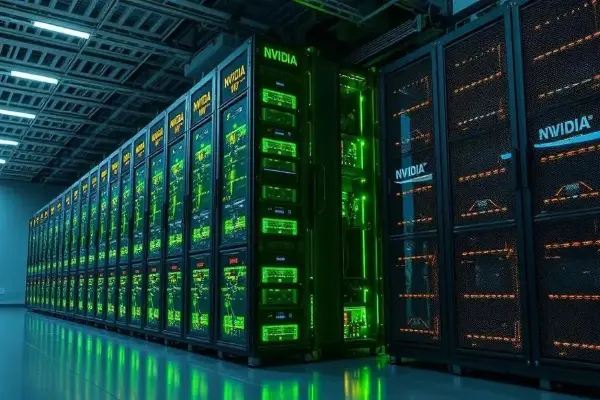
A planned facility known as A201 is expected to house hundreds of millions of dollars in advanced NVIDIA AI servers. The data center is being developed to provide computing capacity to a Chinese technology company.
Its operating company, Bitdeer, has had business dealings with Cantor Fitzgerald, the financial services firm previously led by Lutnick.
According to reporting by The New York Times, Cantor Fitzgerald served as a designated sales agent for a Bitdeer equity offering of up to $1 billion in 2026.
The arrangement highlights how international financial relationships, data center investments and semiconductor supply chains can intersect.
Southeast Asian countries are increasingly important to the global technology industry because they offer opportunities for large-scale infrastructure development. Their position also makes them relevant to discussions about how advanced computing resources move across international borders.
Questions Surround Howard Lutnick's Former Business Connections
Before joining the Trump administration, Howard Lutnick spent decades leading Cantor Fitzgerald. Leadership of the firm was later handed over to his sons.
His current government responsibilities include overseeing the Commerce Department, which plays a central role in US technology export controls.
The overlap between his previous business relationships and his current policy responsibilities has raised questions about potential conflicts of interest.
The New York Times report describes Cantor Fitzgerald's connections with several data center businesses in Southeast Asia that serve Chinese customers. Some of these businesses could be affected by the restrictions being considered by the US government.
However, the reported relationships do not establish that Lutnick's former business interests influenced his government decisions. The Commerce Department has said that Lutnick has complied with his ethics agreements.
That distinction matters. The central issue is whether government policies are sufficiently transparent and whether safeguards can maintain public confidence in decisions affecting strategically important industries.
Washington Faces a Difficult Balance Between Security and Business
The debate reflects a broader challenge for the United States.
Stricter export controls could make it harder for Chinese companies to access advanced American computing technology through overseas facilities. Such measures could strengthen efforts to protect sensitive technology and preserve the country's competitive position.
At the same time, wider restrictions could affect American technology companies, international investors and data center operators working across Asia.
NVIDIA and other US technology businesses have significant commercial interests in international markets. Limiting access to those markets could influence revenue opportunities and the competitive position of American companies.
Policymakers must therefore consider two objectives: protecting national security and maintaining the commercial strength of the US technology sector.
The challenge becomes even more complicated when computing resources can be accessed remotely. A data center does not necessarily need to be located inside China to provide services to Chinese businesses.
This means future export rules may need to focus not only on where chips are physically installed but also on who ultimately receives access to their computing power.
What This Could Mean for the Global AI Industry
The outcome of this debate could have consequences well beyond Washington.
For NVIDIA, the semiconductor industry and international data center operators, regulatory decisions could influence where advanced AI infrastructure is built and which customers can use it.
For Southeast Asia, the issue highlights the growing importance of regional data center investments in the global AI economy. Countries such as Malaysia are attracting attention as companies look for locations to expand computing capacity.
For China, access to advanced computing resources remains an important part of its ambition to strengthen its domestic AI capabilities.
The wider question is whether international technology rules can keep pace with an industry where computing power, investment and digital services increasingly cross national borders.
The Bigger Question Behind America's AI Chip Strategy
The controversy surrounding Howard Lutnick and the proposed export restrictions highlights a much larger issue facing the global technology industry.
AI leadership depends on more than innovation. It also depends on semiconductor manufacturing, infrastructure investment, international partnerships and the rules governing access to advanced computing resources.
As governments seek to protect sensitive technologies while supporting economic growth, the balance between national security and commercial opportunity will become increasingly important.
The decisions made in Washington could help shape not only America's approach to China but also the future direction of the global AI infrastructure market.