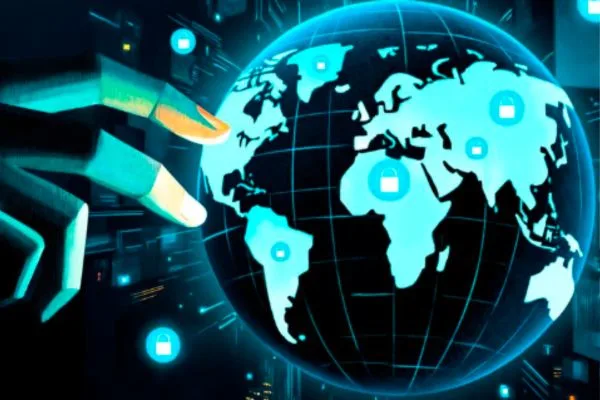
Russia cyber influence is quietly growing in parts of Africa, Asia, and the Middle East, even as the United States and Europe tighten restrictions on Russian technology firms. What began as a defensive strategy against Western sanctions has evolved into a calculated effort to export Russian cybersecurity tools, services, and expertise to governments seeking greater control over their digital infrastructure.
A Global Pitch for “Digital Sovereignty”
In April last year, Nikolai Patrushev, head of Russia’s Security Council, hosted senior security officials from across the world in St Petersburg. Representatives from Brazil, Sudan, Thailand, Uganda, China, Iran, and even the Arab League gathered to hear Moscow’s pitch. The theme of the meeting was “information sovereignty and security,” and Russia presented its commercial cybersecurity companies as trusted partners capable of helping countries defend their digital borders.
Many officials welcomed the idea. With growing concerns over Western monitoring and influence through social media, Russian firms were seen as alternative providers of technology that promised independence. For countries wary of relying solely on American or European firms, Russia’s message of “digital sovereignty” resonated.
Cybersecurity as Part of a Broader Strategy
The expansion of Russia cyber influence is not happening in isolation. It’s part of a wider strategy that includes paramilitary activities, intelligence operations, and cultural outreach. Alongside deploying groups such as Wagner and opening cultural centers in Africa, Moscow has been strengthening its digital partnerships.
Several Russian cybersecurity firms have long-standing ties with the Kremlin’s military and intelligence agencies. For example, the U.S. Treasury sanctioned Positive Technologies in 2021, accusing it of collaborating with Russian intelligence. In 2024, Washington also sanctioned Kaspersky Lab, one of the world’s most well-known cybersecurity companies. Both firms strongly denied the accusations, calling them baseless.
Yet despite Western pressure, these companies have expanded their reach. Positive Technologies signed a distribution deal with Mideast Communication Systems in Cairo, securing a presence in both Africa and the Middle East. Cyberus Foundation, another Russian firm, created Cyberdom Qatar and Hackademy in partnership with local businesses, while also aligning with the Collective Security Treaty Organization (CSTO) to coordinate cyber defenses across its member states.
Kaspersky Lab has made major inroads in Africa by joining the African Network of Cybersecurity Authorities and signing agreements with Smart Africa, a coalition of more than 30 African states focused on digital transformation.
The St Petersburg Forum and Russia’s Tech Diplomacy
At the 2025 St Petersburg International Economic Forum, Russian executives doubled down on their vision. Yury Maksimov, co-founder of Positive Technologies and Cyberus, stressed that many countries cannot achieve true independence without their own cyber defenses. His message was clear: if nations want freedom from Western oversight, Russia is ready to provide the tools.
Adding to the push is Andrey Bezrukov, a former Russian sleeper agent once based in the United States. He now leads the Russian Association for the Export of Technological Sovereignty, an organization explicitly tasked with promoting Moscow’s cybersecurity solutions abroad.
This combination of state backing, commercial expansion, and intelligence links has given Russia cyber influence an increasingly global dimension.
Risks and Concerns
While many governments are embracing Russian offers, experts warn that there are hidden costs. By embedding Russian technology into their digital infrastructure, countries may be granting Moscow access to sensitive systems and data. In addition, Russia’s role in training local cyber professionals gives it potential long-term influence over the next generation of cybersecurity leaders.
Western analysts argue that sanctions, rather than weakening Russia’s digital reach, may have accelerated its expansion. With fewer opportunities in U.S. and European markets, Russian firms turned aggressively toward Africa, Asia, and the Middle East. As a result, they are now positioned to shape the cybersecurity landscape in regions where demand is booming.
A Shifting Digital Order
The Russia cyber influence story is about more than business deals. It reflects a shift in the global digital order. Nations caught between superpowers are increasingly looking for alternatives to Western technology, and Moscow has stepped in to fill the gap.
By tying cybersecurity to broader political and security partnerships, Russia is creating durable relationships that extend beyond technology. For countries eager to control their own information flows and reduce reliance on the West, Russia is positioning itself as a partner of choice.
Whether this expansion ultimately strengthens national security for these countries or creates new vulnerabilities remains an open question. But one thing is clear: despite sanctions, Moscow has turned cybersecurity into a tool of global influence — and that influence is growing.