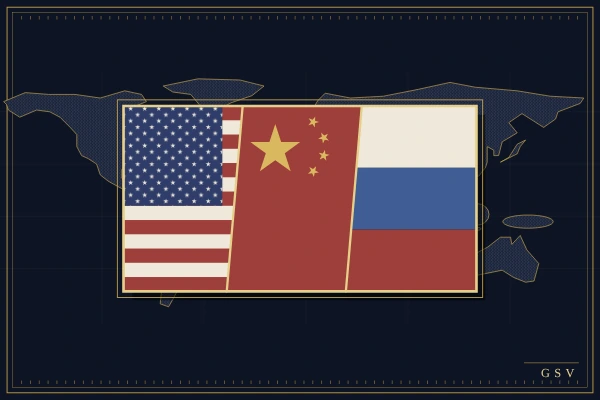
The leaders of the United States, China and Russia have come together for an unprecedented trilateral summit in Shenzhen, China, on November 19, 2026. US President Donald Trump, Chinese President Xi Jinping and Russian President Vladimir Putin held their first-ever three-way meeting on the sidelines of the Asia-Pacific Economic Cooperation (APEC) summit.
The gathering comes at a critical moment for international relations, with tensions surrounding Ukraine, Iran, nuclear security, global trade and technological competition continuing to shape the international landscape.
While the meeting has created an important opportunity for diplomatic engagement, its wider significance extends beyond politics. Decisions and discussions involving these three major powers could influence global markets, energy security, international investment and the future of economic cooperation.
Why the Three Leaders Came Together
The summit brought together three countries with considerable influence over global security, economic policy and international institutions.
Xi Jinping described the gathering as a groundbreaking opportunity, warning that rivalry between major powers can create instability around the world. He called for greater cooperation and responsible leadership.
Trump emphasized the importance of maintaining communication between the three countries, particularly on nuclear weapons and international security. He presented the meeting as an opportunity to explore cooperation on issues that affect the wider world.
Putin highlighted the historical responsibilities of the three countries and their role in preserving the international legal framework established after World War II.
Despite their shared interest in dialogue, the leaders continue to have different strategic priorities and approaches to international affairs.
Nuclear Security and Global Stability Take Centre Stage
Nuclear weapons were among the most important subjects surrounding the meeting.
The United States and Russia possess the world's largest nuclear arsenals, while China has been expanding its nuclear capabilities. This makes cooperation between the three countries particularly important for international security.
Trump expressed interest in reducing nuclear weapons and preventing their proliferation. However, reaching a meaningful agreement would require long-term negotiations and commitments from all three governments.
According to the Stockholm International Peace Research Institute (SIPRI), global nuclear risks and the modernization of nuclear arsenals remain significant international security concerns.
The summit therefore represents an opportunity to maintain communication, even though major differences over nuclear policy remain.
Ukraine, Iran and the Limits of Diplomatic Cooperation
The Russia-Ukraine war and tensions involving Iran remain important challenges for international diplomacy.
Trump has previously expressed interest in ending the war in Ukraine through negotiations. Putin, meanwhile, continues to defend Russia's strategic position.
However, Ukraine's absence from the trilateral meeting raises questions about how discussions between the three powers could translate into a lasting peace agreement.
The public summary of the summit also did not establish a concrete breakthrough on Ukraine or Iran.
This highlights a wider challenge: agreements between major powers cannot automatically resolve conflicts involving countries and communities that are directly affected by them.
What the Summit Could Mean for Global Business
The meeting is important not only for governments but also for companies, investors and international markets.
The United States and China are central to global manufacturing, technology, agriculture and international trade. Their relationship influences supply chains that connect businesses across Asia, Europe and North America.
Trade restrictions, tariffs and technology controls have created uncertainty for companies operating across borders.
A more stable relationship between Washington and Beijing could improve business confidence and create opportunities for international investment. However, unresolved disagreements could continue to affect manufacturing costs, market access and corporate expansion plans.
The World Trade Organization provides an important framework for understanding how international trade policies and economic relationships affect businesses worldwide.
For small and medium-sized enterprises, these developments matter too. Changes in tariffs, sourcing costs and international regulations can directly influence their ability to compete in global markets.
Energy and Technology: Two Areas to Watch
Energy cooperation is another important dimension of the summit.
Russia remains a major participant in global energy markets, while China is a significant energy consumer and the United States plays an influential role in global energy production and trade.
Any changes in cooperation between these countries could affect energy supply chains, commodity markets and long-term investment decisions.
Technology competition also remains a major concern. Semiconductor manufacturing, artificial intelligence and advanced computing are increasingly connected to national security and economic influence.
Businesses operating in these sectors will continue to monitor export restrictions, technology partnerships and regulatory developments.
What Happens After the Historic Meeting?
The summit has demonstrated that communication between Washington, Beijing and Moscow remains possible despite significant geopolitical differences.
Reports following the meeting pointed to discussions about United Nations reforms, energy cooperation and reducing nuclear risks. However, the practical implementation of these discussions will determine their long-term significance.
The United Nations provides the international legal framework that remains central to discussions about sovereignty, peace and international cooperation.
For the global business community, the key question is whether this diplomatic engagement can create a more predictable international environment.
The Road Ahead
The first trilateral meeting between Trump, Xi and Putin is a significant moment in modern diplomacy. It brings together three leaders whose decisions can influence international security, economic relationships and the future of global cooperation.
However, a historic meeting does not automatically produce historic agreements.
The coming months will reveal whether the discussions in Shenzhen lead to meaningful progress on nuclear security, international conflicts, trade and energy cooperation.
For businesses and investors, staying informed about these developments will remain essential. In an interconnected global economy, geopolitical decisions made by major powers can have consequences far beyond their borders.