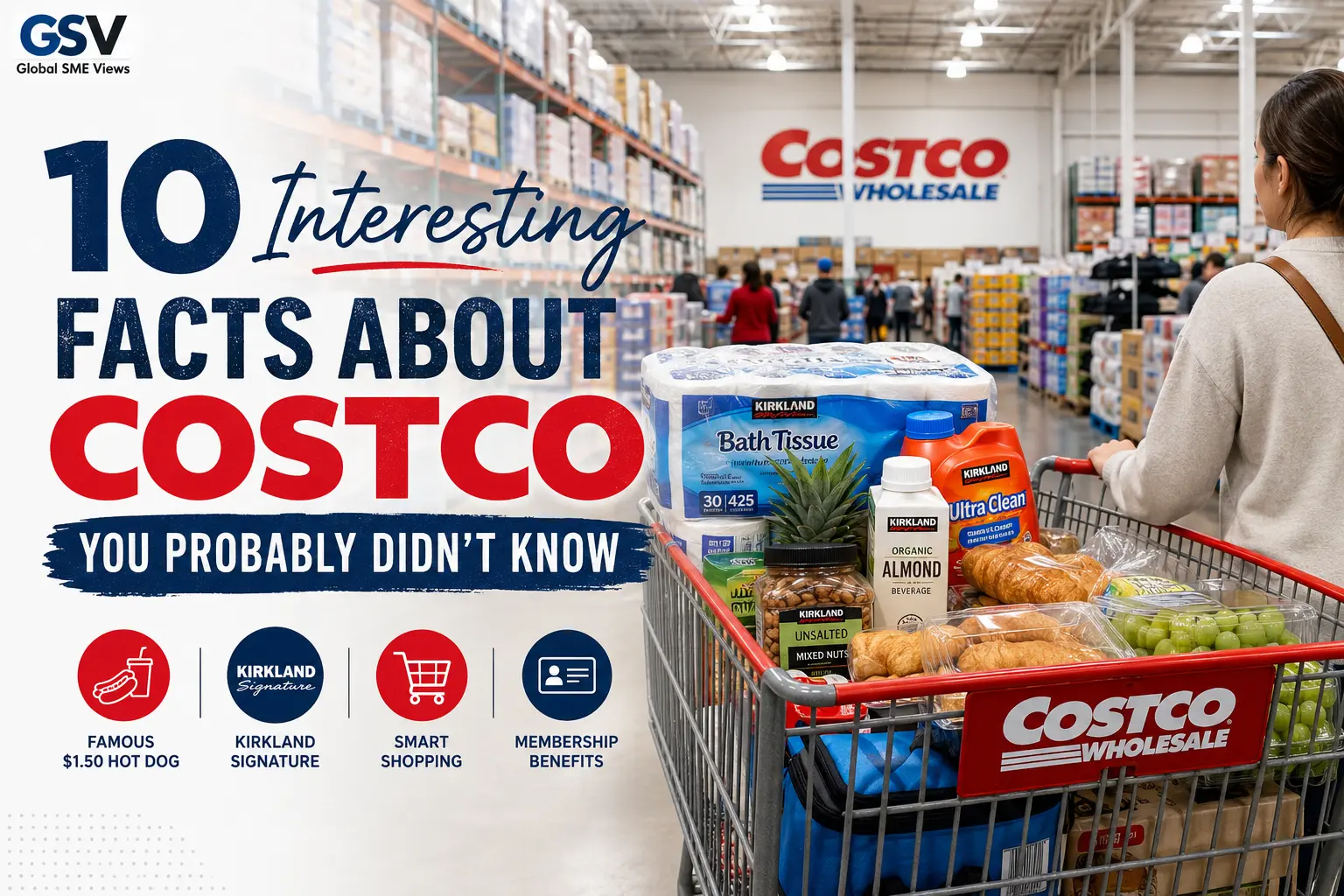
Costco has become a familiar part of everyday life for millions of Americans. For some, it is where they stock up on groceries and household essentials. For others, it is the place to grab a quick meal, discover an unexpected deal, or leave the store with something they never planned to buy.
But there is more to Costco than large warehouses and oversized shopping carts.
The company has built a distinctive shopping experience that has influenced the way people think about memberships, value and even everyday American shopping culture. Here are 10 interesting facts about Costco that reveal some of the thinking behind the retailer.
1. Costco Wasn't Always Called Costco
The story of Costco began in 1976, when Sol Price opened Price Club in San Diego, California. The warehouse-club concept focused on selling products at competitive prices to members.
Costco itself opened its first warehouse in Seattle in 1983.
The two businesses eventually came together in 1993, creating PriceCostco, before the company adopted the Costco name that shoppers know today.
2. The $1.50 Hot Dog Has Become Part of Costco Culture
Ask regular Costco shoppers about the food court and the $1.50 hot dog combo will probably come up quickly.
The famous combination of a hot dog and a drink has remained remarkably inexpensive for decades. It has become more than just a cheap lunch. For many shoppers, it is almost a traditional part of the Costco experience.
The price has become so closely associated with the brand that the hot dog is often mentioned whenever people talk about Costco's unusual approach to value.
3. Kirkland Signature Is One of Costco's Biggest Stories
Walk through a Costco warehouse and you will see the Kirkland Signature name almost everywhere.
Introduced in 1995, Kirkland Signature is Costco's private-label brand. It covers an enormous range of products, from food and beverages to clothing, household goods and personal-care items.
What makes the brand particularly interesting is that Costco positions many of its Kirkland products as alternatives to well-known national brands while maintaining its focus on value.
For shoppers, that means the Kirkland label has become a major reason to return to Costco.
4. Costco Doesn't Try to Make Shopping Too Predictable
One of the strange pleasures of shopping at Costco is not knowing exactly what you might find.
The basic products are familiar, but Costco regularly features seasonal items, electronics, furniture, clothing, appliances and other products that can change over time.
This creates what retail experts sometimes describe as a "treasure hunt" feeling.
You might walk in for paper towels and walk out wondering how you ended up looking at a patio set.
5. The Warehouse Design Is Part of the Experience
Costco warehouses don't look like traditional department stores.
Products are often displayed in large quantities and can remain on pallets rather than being arranged like merchandise in a typical retail store.
It is a practical approach, but it also helps Costco keep the shopping environment focused on value and efficiency.
The warehouse atmosphere has become part of the brand itself.
6. Costco Makes Money From Memberships
The Costco model is different from that of many traditional retailers.
Customers pay an annual membership fee to shop at Costco. That membership model gives the company a recurring source of revenue while encouraging customers to keep coming back.
For shoppers, the calculation is relatively simple: if the savings and benefits they receive are greater than the membership cost, the relationship makes sense.
That simple idea has helped turn Costco membership into a regular household expense for millions of people.
7. The Company Limits Its Product Selection
A Costco warehouse may look enormous, but the company does not attempt to carry every possible version of every product.
Instead, Costco generally focuses on a relatively limited selection compared with many traditional supermarkets and retailers.
That strategy allows the company to concentrate its purchasing power on fewer products.
For customers, it can also make decisions easier. Instead of choosing between dozens of similar brands, there may be only a few options.
8. Costco's Rotisserie Chicken Became a Shopper Favorite
Costco's rotisserie chicken has developed a reputation far beyond the warehouse.
The chickens are sold at a price that has traditionally been kept very competitive, making them attractive to shoppers looking for an easy meal or an inexpensive source of protein.
The product also illustrates something important about Costco's strategy: certain popular products can encourage customers to visit the warehouse even when they originally had no intention of making a large purchase.
9. Costco Has Become More Than a Grocery Store
A modern Costco trip can involve much more than groceries.
Depending on the location and availability, shoppers may find everything from televisions and laptops to tires, furniture, jewelry, clothing and seasonal products.
The company has also offered services in areas such as travel and optical care.
That broad range is one reason Costco can feel less like a single-category retailer and more like a shopping destination.
10. Costco Has Become Part of American Shopping Culture
Perhaps the most interesting Costco fact is not about a particular product at all.
It is about how the company has become part of everyday American life.
The oversized carts, bulk packaging, warehouse aisles, membership cards and food-court traditions have created an experience that is instantly recognizable.
For many families, Costco represents a particular approach to shopping: buy more when the value makes sense, look for quality, and keep an eye out for an unexpected bargain.
Why Costco Continues to Stand Out
Costco's success is not based on one clever product or a flashy shopping experience. Its appeal comes from putting several simple ideas together: membership, value, limited selection, private-label products and a shopping experience that feels different from ordinary retail.
That combination has helped Costco become one of the most recognizable retailers in the United States.
And perhaps that is the biggest reason people keep going back. A trip to Costco is rarely just about buying what is on the shopping list. There is always a chance of finding something you didn't know you needed.
For millions of shoppers, that's part of the fun.