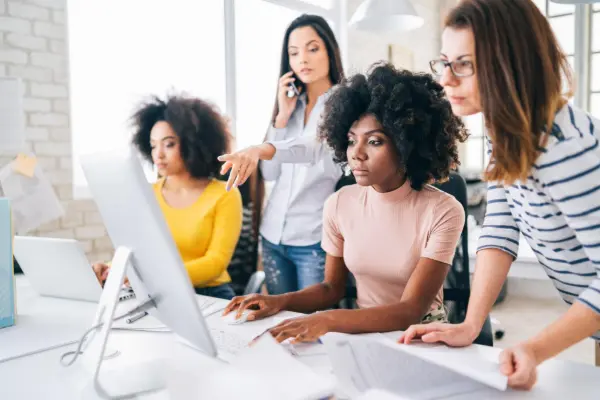
Entrepreneurship is changing quickly, and women are playing an increasingly important role in that change.
From digital businesses and e-commerce brands to technology startups and purpose-driven ventures, women entrepreneurs are building companies across industries that look very different from those of previous generations.
But the story is not simply about more women starting businesses. It is also about how those businesses are being built, how they are using technology, and what they need to grow.
The latest Global Entrepreneurship Monitor (GEM) Women’s Entrepreneurship Report, based on data from 161,528 adults across 51 countries, found that one in ten women started a new business in 2024, compared with one in eight men. The report also highlighted continuing gaps in technology participation, AI adoption, and business continuity.
At the same time, the 2026 outlook from the International Council for Small Business (ICSB) points to digital platforms, global e-commerce, sustainability, mentorship, flexible work, and purpose-led businesses as some of the major trends shaping women entrepreneurship.
So, what does women entrepreneurship look like in 2026?
1. AI Is Becoming a Practical Tool for Women Entrepreneurs

Artificial intelligence is moving beyond large technology companies.
Small-business owners are increasingly able to use AI for everyday tasks such as content creation, customer communication, research, data analysis, planning, and administrative work.
For a solo entrepreneur or small team, this can make a meaningful difference. Instead of spending hours on repetitive tasks, founders can use technology to streamline parts of their operations and focus more attention on customers and business strategy.
However, there is still a gap to address.
GEM's latest research found that women were 11% less likely than men to see the benefits of AI for their businesses. Women were also less than half as likely as men to be active in the ICT sector.
This makes digital and AI skills an important area of opportunity for women entrepreneurs in the coming years.
2. Digital-First Businesses Are Opening New Opportunities
Starting a business today does not necessarily require an office, a large workforce, or a physical storefront.
A website, social media presence, digital payment system, online marketplace, and a strong product or service can provide the foundation for a modern business.
This is particularly useful for women entrepreneurs who want to build businesses with relatively lean operations.
Consulting, online education, design, marketing, professional services, e-commerce, and digital products are just some examples of businesses that can operate across locations.
The important shift is that digital technology is no longer simply a marketing tool. For many entrepreneurs, it is becoming part of the business model itself.
3. E-Commerce Is Helping Women Reach Wider Markets

E-commerce continues to change the way small businesses find customers.
A woman running a product-based business can now potentially reach customers outside her city or country without immediately investing in physical stores.
This creates opportunities for fashion brands, beauty businesses, handmade products, food companies, home businesses, and many other consumer-focused ventures.
But selling online is becoming more competitive.
Successful businesses need more than a product page. Branding, customer experience, logistics, digital marketing, reviews, payments, and customer retention all matter.
The 2026 women entrepreneurship outlook from ICSB identifies global e-commerce and cross-border growth as important trends, highlighting how digital platforms can help women entrepreneurs reach customers beyond their domestic markets.
4. More Women-Led Businesses Are Thinking Globally
Digital business models are also making international markets more accessible.
A consultant can work with clients in another country. A software company can sell internationally from its first year. An online retailer can reach customers through global marketplaces.
For many women entrepreneurs, this creates opportunities to test new markets without immediately establishing a physical presence in another country.
However, international expansion still requires careful planning.
Regulations, payments, logistics, taxation, language, cultural differences, and customer expectations can all affect how successfully a business enters a new market.
Going global may be easier digitally, but building a global business still requires a strong foundation.
5. Purpose Is Becoming Part of the Business Model
For many entrepreneurs, business success is no longer measured only by revenue.
Purpose-driven businesses are becoming increasingly visible, particularly in areas such as education, healthcare, sustainability, financial inclusion, community development, and social impact.
Women entrepreneurs are building businesses around problems they understand through professional or personal experience.
That can create a strong connection between the founder, the product, and the customer.
The trend does not mean that businesses should sacrifice profitability. Instead, it reflects a broader idea that a company can create economic value while also addressing a meaningful problem.
Purpose can also become part of a company's identity, helping businesses communicate what they stand for and why their work matters.
6. Sustainability Is Becoming a Business Consideration
Sustainability is also moving into everyday business decisions.
For a small business, sustainability might mean reducing packaging, choosing responsible suppliers, cutting waste, improving energy efficiency, or developing products with longer lifecycles.
It does not necessarily require a complete transformation of the business.
For many entrepreneurs, practical changes can begin with small operational decisions and gradually become part of a broader business strategy.
Sustainability can therefore become both an operational consideration and a way of building a stronger, more responsible brand.
7. Mentorship and Networks Can Make a Difference
Entrepreneurship can feel like an individual journey, but business growth rarely happens completely alone.
Mentors, professional networks, peer groups, investors, industry experts, and other entrepreneurs can provide knowledge and connections that are difficult to develop independently.
This is particularly important when women enter industries where they have historically been underrepresented.
The latest GEM research highlights the importance of mentorship, training, investment networks, and stronger support systems in helping women overcome barriers to business continuity and growth.
Sometimes, the most valuable thing a network provides is not funding or a customer lead, but the opportunity to learn from someone who has already faced a similar challenge.
8. The Focus Is Shifting From Starting to Scaling
Starting a business is only the beginning.
The harder question is whether the company can survive, grow, hire people, enter new markets, and operate without depending entirely on its founder.
This is an important issue for women entrepreneurs.
GEM found that women were 47% more likely than men to report closing a business because of family or personal reasons. The report also found that women were more likely than men to start businesses as solopreneurs.
These findings highlight why sustainable business structures matter.
Growth does not always mean becoming a huge corporation. It can mean creating reliable systems, hiring the right people, improving financial management, developing repeat customers, or expanding into a carefully selected market.
For many founders, sustainable growth may be more valuable than rapid expansion.
What the Future Holds for Women Entrepreneurship
The future of women entrepreneurship is unlikely to be defined by one technology or one type of business.
Instead, several trends are coming together.
A woman entrepreneur might use AI to manage routine work, sell products through e-commerce, build a purpose-driven brand, work with a remote team, and serve customers in several countries.
That combination would have been much harder for a small business to achieve in the past.
Yet opportunities alone are not enough.
Access to capital, digital skills, mentorship, technology, and supportive business ecosystems will continue to influence how far women-led businesses can go.
The latest GEM research also points to the need for stronger digital and AI adoption programmes, mentorship and training, support for women in high-potential sectors, and broader investment networks.
The opportunity is growing, but creating an environment where women can take full advantage of that opportunity will require continued investment in skills, access, and support.
Final Thoughts
Women entrepreneurship in 2026 is moving into a more digital, connected, and purpose-driven phase.
Women are not simply entering traditional business sectors. They are building online companies, developing technology-enabled services, expanding into international markets, creating sustainable products, and rethinking how businesses can operate.
The next challenge is not just encouraging more women to become entrepreneurs.
It is creating an environment where women can build businesses that survive, grow, employ people, innovate, and compete in global markets.
That will require technology, capital, networks, education, and, perhaps most importantly, an ecosystem that supports women beyond the moment they launch their first business.