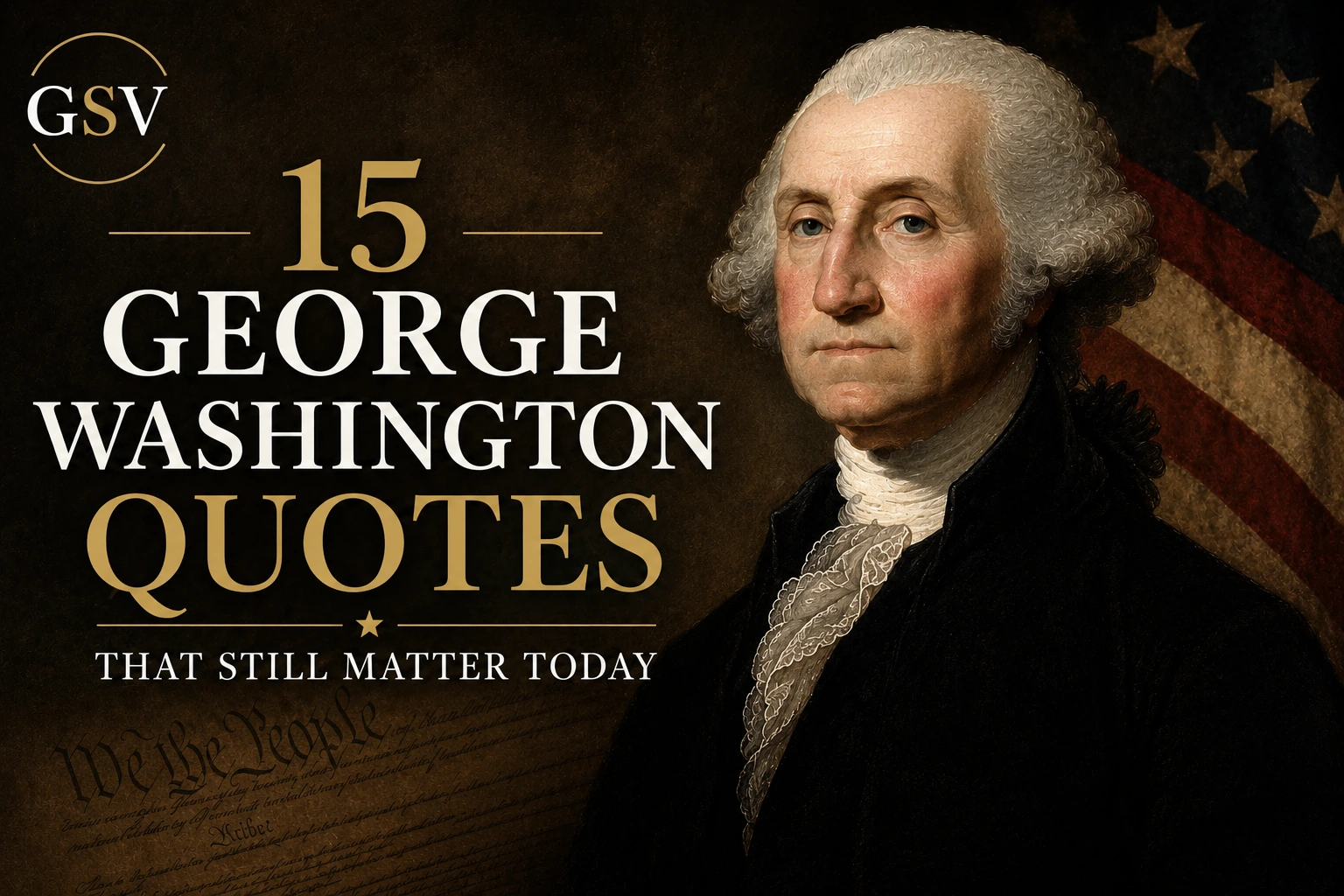
These timeless words offer valuable lessons on leadership, character, and life that still resonate today.
1. “Associate yourself with Men of good Quality if you Esteem your own Reputation; for 'tis better to be alone than in bad Company.”
This advice focuses on the influence of relationships. The people we spend time with can affect our decisions, reputation and personal development.
For modern professionals and entrepreneurs, the lesson is straightforward: building relationships with trustworthy and capable people can be more valuable than simply having a large network.
This advice is part of Washington's Rules of Civility, which he copied as a young man.
2. “Be courteous to all, but intimate with few, and let those few be well tried before you give them your confidence.”
Washington's words highlight the difference between being respectful toward everyone and giving deep trust to only a few people.
In today's professional environment, networking is important, but trust should still be earned. Strong relationships are usually built through consistency, reliability and time.
3. “Happiness and moral duty are inseparably connected.”
Washington viewed happiness and responsibility as closely related. The idea suggests that personal satisfaction should not be separated from ethical behavior.
For modern leaders, this can translate into making decisions that consider not only immediate success but also integrity, responsibility and long-term consequences.
4. “The best and most important road to happiness is to live within our means.”
Financial pressure remains a common challenge for individuals and businesses. Washington's observation offers a simple principle: financial discipline can contribute to stability and peace of mind.
The modern interpretation is not about avoiding ambition. Instead, it is about balancing ambition with responsible financial decisions.
5. “To be prepared for war is one of the most effectual means of preserving peace.”
Washington was speaking in a very different historical context, but the broader idea of preparation remains relevant.
Businesses prepare for market changes, cybersecurity threats, financial difficulties and unexpected disruptions. Preparation cannot eliminate every risk, but it can make an organization more resilient when challenges arise.
6. “Observe good faith and justice towards all Nations; cultivate peace and harmony with all.”
Washington's emphasis on good faith and peaceful relations reflects the importance he placed on cooperation.
The principle remains relevant in today's interconnected economy, where businesses and organizations often work across countries, cultures and markets.
Trust and constructive relationships can become important assets in both business and public life.
7. “Labor to keep alive in your breast that little spark of celestial fire, called conscience.”
The quote presents conscience as an internal guide for decision-making.
For today's leaders, that idea can be applied to situations where the easiest or most profitable choice may not always be the most responsible one. Reputation is often shaped by decisions that are made when there is little external pressure to do the right thing.
8. “Truth will ultimately prevail where there is pains to bring it to light.”
Washington's observation has particular relevance in an age of instant information.
People today encounter news, opinions and claims through websites, social media and digital platforms every day. Determining what is accurate requires patience and responsible research.
For businesses and media organizations, credibility depends heavily on making an effort to establish what is true.
9. “Liberty, when it begins to take root, is a plant of rapid growth.”
Washington used the image of a growing plant to describe liberty.
The statement reflects the importance he placed on freedom and self-government. In the modern world, it can also encourage reflection on the responsibilities that come with protecting individual freedoms and participating in civic life.
10. “Discipline is the soul of an army.”
Washington understood that discipline was essential to maintaining an effective fighting force.
The same broader principle applies to modern organizations. A talented team can still struggle without clear processes, accountability and consistency.
Whether in business, sports or public service, discipline can turn individual ability into collective performance.
11. “Let us raise a standard to which the wise and honest can repair.”
This statement reflects an aspiration toward higher standards of conduct.
Modern leaders can take a similar approach by establishing clear expectations and creating an environment where honesty, competence and responsibility are valued.
Leadership is not simply about telling people what to do. It is also about setting an example others can follow.
12. “I hope I shall always possess firmness and virtue enough to maintain what I consider the most enviable of all titles, the character of an honest man.”
Washington placed significant value on personal character.
In modern professional life, reputation can influence partnerships, customers, employees and long-term opportunities. A strong reputation is rarely created by one major decision; it develops through repeated actions over time.
13. “The Constitution is the guide which I will never abandon.”
Washington's statement reflects his emphasis on constitutional government and established principles.
The broader leadership lesson is that effective institutions need rules and accountability. Whether in government or business, clearly defined principles can help prevent decisions from becoming dependent entirely on individual preferences.
14. “Nothing but harmony, honesty, industry and frugality are necessary to make us a great and happy people.”
This statement brings together several values that Washington considered important: cooperation, honesty, hard work and financial restraint.
These principles can still resonate with entrepreneurs and professionals. Growth may require innovation and ambition, but sustainable success also depends on consistency, trust and responsible management.
15. “A man's intentions should be allowed in some respects to plead for his actions.”
Washington recognized that understanding a person's intentions can be important when judging their actions.
In modern leadership, this can encourage managers and team members to look beyond a single mistake and consider the circumstances behind a decision. Accountability remains important, but so does context.
Why George Washington's Quotes Still Matter
George Washington lived in a period dramatically different from today's world. Modern society has global businesses, artificial intelligence, social media and an economy that operates across borders in seconds.
Yet some leadership challenges remain remarkably familiar.
People still have to decide whom to trust. Leaders still have to make difficult decisions. Organizations still need discipline. Businesses still depend on reputation. And individuals still face choices between convenience and integrity.
That is why Washington's historical words continue to attract attention.
His quotes should not necessarily be treated as direct instructions for modern life. Instead, they can be viewed as historical perspectives that encourage readers to think about character, responsibility, leadership and public service.
For today's entrepreneurs and professionals, one of the strongest lessons is that leadership is not simply about position or authority. It is also about the character a person demonstrates through everyday decisions.
Final Thoughts
More than 200 years after George Washington's presidency, his writings continue to provide an interesting window into the values and challenges of an earlier era.
Whether the subject is leadership, discipline, personal reputation, financial responsibility or public service, many of the principles behind his words remain recognizable today.
The world has changed considerably since Washington's time. Human decisions, however, are still shaped by many of the same questions: Who should we trust? What principles should guide us? How should leaders behave? And what kind of reputation do we want to leave behind?
Those questions help explain why George Washington's words continue to be read and discussed today.
Historical Sources
The quotations and historical context in this article were checked against historical collections including George Washington's Mount Vernon and Founders Online, which provides access to documents from the Washington Papers. Mount Vernon documents Washington's “better to be alone than in bad company” statement as Rule No. 56 of the Rules of Civility, while his correspondence and public addresses are preserved in the historical record.