From geopolitical risk to supply-chain resilience, Strider Technologies is using artificial intelligence and strategic intelligence to help organizations understand a rapidly changing global environment.
In a business environment increasingly shaped by geopolitical competition, technology dependencies, supply-chain vulnerabilities, and cross-border risks, organizations need more than conventional information. They need the ability to connect large volumes of data, identify relevant patterns, and turn those findings into actionable intelligence.
This is the challenge Strider Technologies is addressing.
Founded in 2019 and headquartered in Salt Lake City, Utah, Strider is a strategic intelligence company that combines proprietary artificial intelligence, open-source intelligence, and its own risk methodology to help organizations understand nation-state and geopolitical risks. The company works across areas including technology, supply chains, research, partnerships, and broader organizational ecosystems.
Turning Complex Data into Strategic Intelligence
One of Strider's central ideas is that publicly available information can contain important signals about emerging risks. The challenge is finding those signals within an enormous and constantly changing information environment.
According to the company, its intelligence foundation includes more than 25 billion global multilingual documents, with more than 20 million new documents captured each day. It also identifies more than 100,000 harder-to-access sources beyond traditional search.
Strider combines this data infrastructure with AI and its strategic intelligence methodology to help organizations investigate relationships involving people, organizations, technologies, partners, and supply chains.
The approach is particularly relevant for organizations operating in industries where intellectual property, technology, research, and international supply chains are strategically important.
AI as an Intelligence Layer
Artificial intelligence is an important part of Strider's platform.
The company introduced Spark AI in 2023 as a generative AI-powered search capability designed to help users explore Strider's intelligence data through natural-language questions. The system was initially focused on areas such as procurement data, supply-chain analysis, sanctions compliance, and export controls.
Rather than simply providing another general-purpose search tool, the objective is to allow users to interrogate specialized intelligence and trace findings back to underlying source information.
This combination of large-scale data, AI-powered search, and strategic context illustrates a broader shift in enterprise technology: AI is increasingly being developed not only to automate routine tasks but also to help professionals navigate complex information environments.
Supporting Technology, Research and Supply-Chain Resilience
Strider's applications extend beyond commercial businesses.
The company also provides intelligence capabilities for government organizations, universities, and research institutions. In 2024, Strider launched a version of its platform specifically for academia, designed to help universities and research organizations identify potential risks involving research, technology, personnel, collaborators, and third-party partners.
This reflects an important change in how organizations think about security. Protecting innovation is no longer limited to securing an internal network. It can also involve understanding external relationships, suppliers, research partnerships, technology ecosystems, and other connections.
Building a Global Strategic Intelligence Company
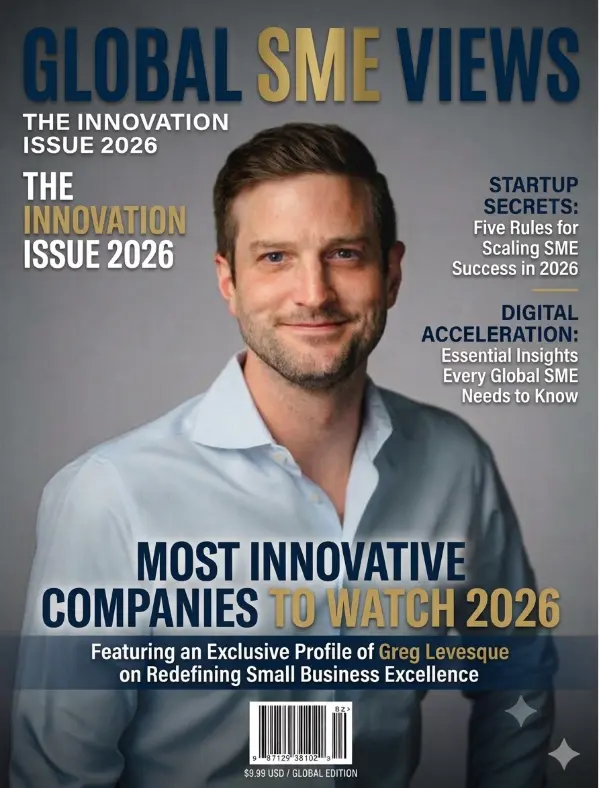
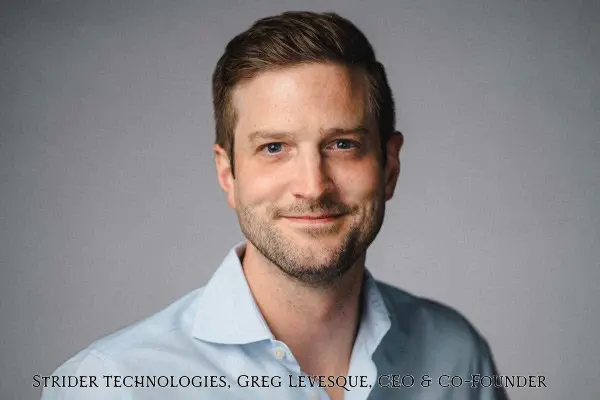
Strider was founded by Greg Levesque, Eric Levesque, and Mike Brown. Greg Levesque serves as CEO and Co-Founder, while Eric Levesque is President and Co-Founder. The company's current profile lists more than 300 employees and offices in Salt Lake City, Washington, D.C., London, Tokyo, and Sydney.
The company has also continued to expand its leadership and financial infrastructure. In 2024, Strider announced a $55 million Series C funding round led by Pelion Venture Partners, and in 2025 it appointed Dallin Salmon as Chief Financial Officer to support its growth and expansion.
Looking Ahead
As businesses become more connected to global technology, research, and supply-chain ecosystems, understanding external risk is becoming an increasingly important part of strategic decision-making.
Strider Technologies represents one example of how artificial intelligence can be combined with specialized data and human expertise to address that challenge.
Its work demonstrates a broader direction in enterprise innovation: transforming large and complex information environments into intelligence that organizations can use to understand risk, protect innovation, and make more informed decisions.
Editorial Note
Global SME Views selected Strider Technologies for this editorial spotlight based on its work at the intersection of artificial intelligence, strategic intelligence, technology, and global risk.