Tempus emerged in 2015 as a response to one of the most persistent problems in modern medicine: the overwhelming amount of clinical and molecular data that remains unused or underleveraged in everyday care.
Founded by Eric Lefkofsky after a personal encounter with cancer in his family, the company began with a simple but powerful conviction that outcomes could improve if doctors had clearer, data-driven insights at the moment decisions were made.
This belief shaped Tempus’s early mission, which focused on bringing greater precision and structure to cancer treatment through the integration of genomic information and clinical data.
Building a Foundation in Precision Oncology
In its earliest years, Tempus concentrated on oncology, a field where the molecular characteristics of tumors often dictate which treatments will be most effective. The company invested in sophisticated sequencing technologies capable of painting detailed portraits of tumor biology, from gene mutations to expression patterns.
While many laboratories provide testing services, Tempus differentiated itself by embedding test results within a platform that connects genomic findings to clinical histories, imaging studies, and treatment records. It viewed sequencing not as a standalone service but as one piece of a larger, interconnected system that could guide personalized therapy.
Expanding Beyond Cancer
As the company matured, Tempus began extending its technological framework into other medical specialties. It recognized that the same data-rich approach that revolutionized precision oncology could have equal impact in areas such as cardiology, psychiatry, and neurology.
The company developed analytical tools and AI models aimed at predicting disease risk, identifying diagnostic patterns, and enhancing care pathways. This expansion broadened Tempus’s role from a cancer-focused diagnostics provider into a multi-specialty precision-medicine company capable of supporting physicians across a wide array of disciplines.
AI as the Core Engine of Insight
Artificial intelligence sits at the center of Tempus’s value proposition. The company has invested heavily in machine learning systems that interpret multimodal data sources, including clinical notes, genomic sequences, molecular biomarkers, pathology slides, and radiology images. Its platforms are designed to deliver guidance to clinicians in real time, raising questions, highlighting patterns, or suggesting potential treatment options based on the latest evidence and guidelines.
Tempus views AI not as a replacement for clinical judgment but as a powerful complement that synthesizes information faster and with greater depth than human analysis alone.
A Data Ecosystem Built on Collaboration
One of Tempus’s defining strategies has been its commitment to building an extensive network of hospitals, academic medical centers, and pharmaceutical partners. These relationships allow the company to gather a continuous stream of de-identified data, which in turn strengthens the predictive accuracy of its algorithms. Clinical partners use Tempus’s sequencing and AI tools to support patient care, while researchers rely on its datasets to study disease mechanisms, evaluate therapies, and design clinical trials. Pharmaceutical companies partner with Tempus to identify patient populations, investigate biomarkers, and accelerate drug development. Through this ecosystem, Tempus positions itself as an engine of scientific discovery as well as clinical support.
Strengthening Capabilities Through Strategic Growth
A major step in Tempus’s growth was the acquisition of a leading hereditary genetics laboratory, which expanded its offerings from tumor sequencing to inherited-disease testing. This addition allowed Tempus to serve patients before disease onset through carrier screening, risk assessment, and germline analysis.
The move marked a shift toward a more comprehensive approach to genetics, enabling the company to support both preventative and therapeutic dimensions of care. It also signaled Tempus’s intention to be a full-spectrum precision-medicine provider rather than a company limited to oncology diagnostics.
Commitment to Research and Scientific Contribution
Tempus’s research output has become one of its most notable achievements. The company has published hundreds of studies across oncology, neurology, immunology, and health data science, demonstrating how real-world datasets can complement traditional clinical trials. These publications not only validate Tempus’s technology but also contribute to broader scientific understanding. The company collaborates with leading academic institutions, engages in multi-center research initiatives, and supports investigators seeking to analyze outcomes or identify new avenues of discovery.
Ethical and Practical Challenges
Despite its impressive technological footprint, Tempus operates in a field that demands rigorous attention to privacy, ethics, and data security. Handling sensitive patient information requires advanced safeguards, transparent data governance, and trust from the clinical community.
The company must continually navigate questions about who benefits from precision medicine and how to ensure that AI does not reinforce existing healthcare disparities. Access to genomic testing and targeted therapies remains unequal, and the challenge of deploying precision tools in under-resourced settings continues to shape the company’s mission. Tempus recognizes that delivering equitable precision care requires addressing these systemic barriers.
A Vision for the Future of Care
Tempus envisions a healthcare environment where AI-guided insights are woven seamlessly into daily clinical practice. In this future, molecular profiling becomes routine, treatment decisions draw on vast aggregated datasets, and care pathways adapt dynamically to each patient’s biology and medical history.
The company aims to replace reactive medicine with a predictive, highly personalized model in which every patient benefits from the collective knowledge of those who came before. Achieving this vision will require continued advances in technology, strong partnerships with clinicians, and sustained efforts to make precision medicine accessible to all.
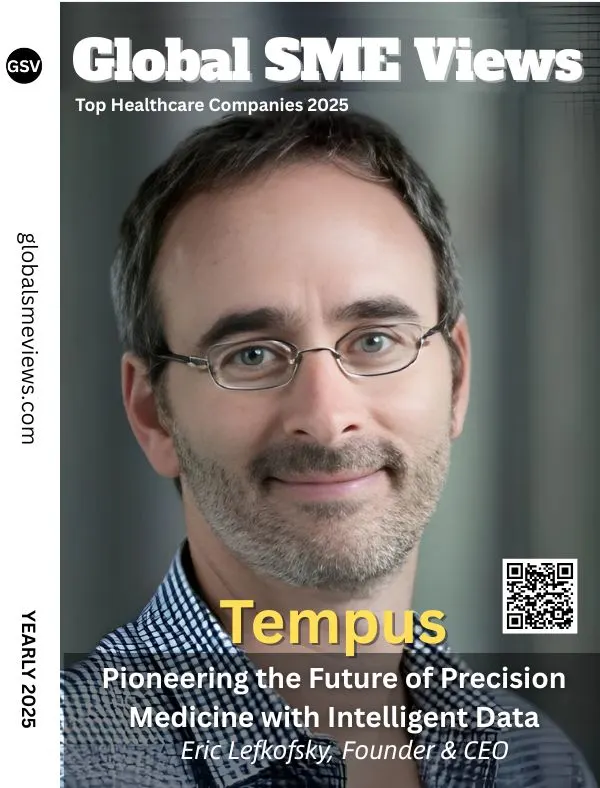
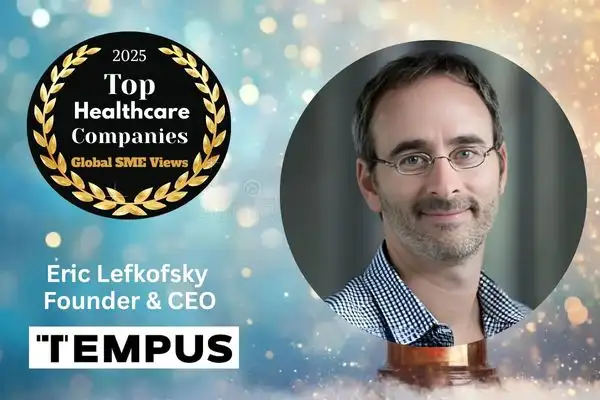
Eric Lefkofsky, Founder & CEO
Eric Lefkofsky is the founder and CEO of Tempus, a leading company in artificial intelligence and precision medicine. He is also the co-founder and General Partner of Lightbank, a private venture capital firm that invests in innovative technology companies.
Over his career, Lefkofsky has co-founded several successful ventures, including Pathos AI, a clinical-stage biotechnology company focused on transforming drug development; Groupon (NASDAQ: GRPN), a global e-commerce marketplace; Mediaocean, a provider of integrated media procurement technology; Echo Global Logistics (NASDAQ: ECHO), a technology-driven transportation and logistics firm; and InnerWorkings (NASDAQ: INWK), a global managed print and promotional solutions company.
Beyond his entrepreneurial work, Lefkofsky co-chairs the Lefkofsky Family Foundation with his wife Liz, supporting high-impact initiatives that improve lives in communities they serve. He also contributes to the arts and healthcare as a board member of The Art Institute of Chicago and Northwestern Medicine. Lefkofsky earned his bachelor’s degree and J.D. from the University of Michigan.
“Through our scientific publications and research projects, we are accelerating and transforming personalized patient care.”