Alzheimer’s disease has long resisted conventional treatments, leaving millions of families grappling with its devastating effects. Leucadia Therapeutics, based in Riverside, California, is taking a bold approach to this global challenge. Through a combination of innovative technology, scientific insight, and a patient-centered mission, the company is redefining how Alzheimer’s might be treated and prevented.
A Revolutionary Approach to Alzheimer’s
Founded with the mission to “erase Alzheimer’s disease,” Leucadia Therapeutics is developing Arethusta®, a first-in-class outpatient treatment. Unlike traditional therapies that target symptoms or biochemical markers of the disease, Arethusta® focuses on restoring a critical clearance pathway in the brain. By facilitating the removal of neurotoxins and metabolic waste, the device aims to reverse cognitive decline in patients with mild cognitive impairment, potentially halting the progression to full-blown Alzheimer’s. This approach challenges decades of drug-based strategies and introduces a new paradigm in neurodegenerative care.
Early Intervention Through Diagnostics
Leucadia places significant emphasis on early detection. The company’s Project Cribrose involves 2,000 participants and seeks to refine proprietary diagnostic tools. Participants undergo a brief CT scan and a series of cognitive tests designed by Leucadia in collaboration with Arrowhead Regional Medical Center. The objective is to identify individuals at risk of developing Alzheimer’s before symptoms appear, enabling timely intervention. By combining diagnostics with therapeutic strategies, Leucadia aims to address the disease at its roots rather than its downstream consequences.
Transforming Alzheimer’s Care
Leucadia’s work focuses on a fundamental physiological process: the clearance of toxic substances from the brain. If successful, this approach could reverse early cognitive decline and even prevent Alzheimer’s from developing in high-risk individuals. The company emphasizes the emotional and human impact of the disease, describing it as “mourning the loss of someone while they are still alive.” By integrating diagnostics, treatment, and patient engagement, Leucadia envisions a comprehensive platform that addresses both the clinical and emotional dimensions of Alzheimer’s care.
Navigating Challenges and Opportunities
The road ahead for Leucadia is complex. Clinical trials for implantable devices require rigorous testing to ensure safety and efficacy. Regulatory approval, patient acceptance, and physician adoption are all significant hurdles. Yet the company’s methodical approach — combining robust preclinical research with carefully designed clinical studies — reflects an understanding of these challenges. Success could revolutionize the standard of care for Alzheimer’s, offering not just symptomatic relief but a meaningful alteration of the disease’s trajectory.
Collaboration and Innovation
Leucadia’s strategy emphasizes collaboration with medical centers, neurosurgeons, and research institutions. These partnerships strengthen both the quality of research and the practical implementation of their technology. By maintaining close ties with the medical community, the company ensures that its innovations are aligned with patient needs and clinical realities, enhancing the potential for successful adoption and long-term impact.
A Vision of Hope
Leucadia Therapeutics represents a story of ambition, innovation, and human-centered mission. Its work demonstrates that tackling Alzheimer’s requires more than incremental improvements; it demands reimagining how the disease is understood and treated. Through Arethusta® and the integration of diagnostics, the company aims to restore cognitive function, prevent decline, and improve quality of life for millions of people worldwide.
While clinical results are still forthcoming, Leucadia’s approach exemplifies the kind of bold innovation that has the potential to reshape Alzheimer’s care. In doing so, the company not only pushes the boundaries of medical science but also offers hope to patients and families confronting one of the most challenging neurological diseases of our time.
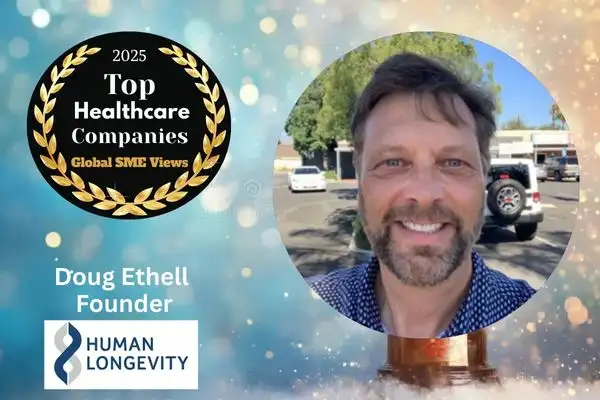
Doug Ethell, Founder, Chairman, and Chief Executive Officer
Dr. Doug Ethell’s pioneering research forms the scientific cornerstone of Leucadia Therapeutics. With a PhD in Neuroscience, he has dedicated over two decades to studying Alzheimer’s disease. His early work included a long-term Human Frontiers of Science Fellowship at Germany’s Max Planck Institute for Psychiatry and a research associate role at the Scripps Research Institute in La Jolla, California.
Dr. Ethell led Alzheimer’s research at the La Jolla Institute for Immunology, served on the faculty at the University of California, Riverside, and later established the Molecular Neurobiology Group at Western University of Health Sciences in Pomona, California, where he also chaired the Department of Neuroscience. Over his career, he has authored more than 85 scientific papers and presentations, contributing extensively to the understanding of neurodegenerative disease.
“We are taking a different approach to the problem with a non-invasive test to predict who will get Alzheimer’s disease long before even the earliest symptoms appear.”