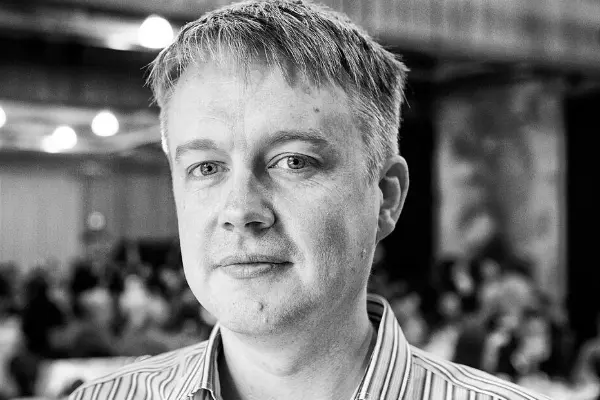
The artificial intelligence boom is creating extraordinary wealth, but few investors have a more unusual relationship with the technology than Jaan Tallinn. The Estonian programmer and Skype cofounder has spent years supporting research into the potential dangers of advanced AI. Yet one of his biggest investments, Anthropic, has helped turn him into a billionaire worth an estimated $17 billion.
Tallinn's story highlights a growing contradiction in the technology industry: some of the people most concerned about the long-term risks of artificial intelligence are also investing in the companies developing it.
According to Forbes' November 18, 2026 report by Giacomo Tognini, Tallinn's early investment in Anthropic has become one of the most successful technology bets of recent years. The company's historic stock market debut has brought even greater attention to his growing fortune and his commitment to AI safety.
From Skype Success to Early AI Investments
Tallinn's journey into technology began long before artificial intelligence became a mainstream business opportunity.
He developed his programming skills in Estonia and later became one of the founding engineers of Skype, the internet communication platform that transformed how people connected across countries.
Skype was acquired by eBay in 2005 for $2.6 billion, giving Tallinn the financial foundation to pursue new technology investments and philanthropic interests.
Rather than focusing exclusively on conventional technology opportunities, he became increasingly interested in the long-term consequences of artificial intelligence.
His experience in software development helped him recognize both the possibilities of advanced computing and the challenges associated with creating increasingly capable machines.
Why an AI Investor Is Concerned About AI
Tallinn's interest in AI safety began years before the current generative AI boom.
He became concerned that sufficiently advanced artificial intelligence could create risks extending beyond conventional cybersecurity, employment or economic disruption.
In response, he supported research organizations focused on understanding and reducing existential risks.
He helped establish the Centre for the Study of Existential Risk at the University of Cambridge in 2012 and cofounded the Future of Life Institute in 2014.
These organizations support research and initiatives examining how humanity can manage potentially dangerous technological developments.
Tallinn's position is unusual because he believes that supporting responsible AI development also requires having influence within the industry.
The Anthropic Investment That Changed His Fortune
In 2021, Anthropic cofounder and CEO Dario Amodei approached Tallinn about investing in the young AI company.
Tallinn agreed to lead its Series A funding round, reportedly after seeking reassurance that his participation would not simply accelerate the development of another competing AI company.
He subsequently invested in Anthropic's Series B round in 2022.
At the time, Anthropic was an emerging startup. Its later success transformed the value of those early investments.
Forbes estimated that Tallinn's Anthropic stake was worth approximately $15.6 billion at the company's $83 IPO price. Combined with his other investments, including SpaceX, his estimated fortune reached $17 billion.
The company priced its IPO at $83 per share on November 18, implying an initial valuation of approximately $1.5 trillion.
On November 19, Anthropic began trading on Nasdaq. Its shares closed at $97.17, up approximately 17% from the offering price, after briefly reaching a valuation of around $2 trillion.
These developments demonstrate how quickly early investments in successful AI companies can translate into enormous private fortunes.
The Business Paradox of AI Safety
Tallinn's investment philosophy raises an important question for the technology industry: can investors support the development of artificial intelligence while simultaneously trying to slow down its potentially dangerous applications?
Anthropic has positioned AI safety as a central part of its corporate identity. Its leadership has repeatedly highlighted the importance of responsible development, human oversight and managing advanced AI risks.
However, the company also operates in a highly competitive market where technological progress, commercial expansion and investor expectations create pressure to move quickly.
This tension is not limited to Anthropic. Technology companies across the industry are balancing commercial opportunities against concerns about cybersecurity, misinformation, employment disruption and the potential loss of human control over increasingly capable systems.
Tallinn's investments and philanthropic activities illustrate one approach to addressing these challenges: participating in the technology industry while directing resources towards research and risk reduction.
What His Story Means for the Future of AI
Tallinn's journey offers an important perspective on the relationship between technology investment, wealth creation and responsibility.
His financial success demonstrates the potential returns available to investors who identify transformative technologies early. At the same time, his long-standing concerns about AI show that financial opportunity does not necessarily eliminate questions about the broader consequences of innovation.
For entrepreneurs, investors and business leaders, the lesson is that technological progress should be evaluated not only through market valuations and commercial success but also through its long-term impact on society.
As artificial intelligence becomes increasingly important across industries, the people funding its development will have a growing influence over the direction of the technology.
Jaan Tallinn's story captures this defining challenge of the AI era: how to benefit from one of the world's most powerful technologies while ensuring that its development remains aligned with humanity's long-term interests.